
THINGS I LEARN
FROM TREES
THINGS I LEARN FROM TREES BY ROWAN REDDINGTON
The inaugural winner of The Brunel Prize is Rowan Reddington, who graduated with a BA in Creative Writing at Brunel in 2025 with First Class Honours. Chosen by chair of judges Paul Murray, Rowan’s story, Things I Learn from Trees, chronicles a day in the life of a tree surgeon, as he travels from job to job with the other men who make up the crew. Tragedy and frivolity converge, and amidst the jesting and jibes, it is clear that not everything can be shared openly among colleagues. Paul Murray, Chair of Judges, described the story as ‘poetic, compassionate, full of humour and wisdom.’
You can read the story below.
ROWAN REDDINGTON
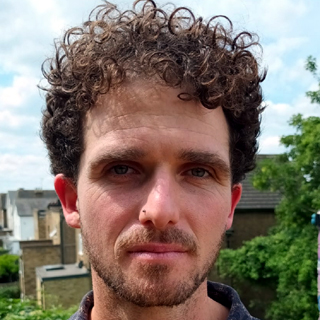
Rowan is a poet and tree surgeon living in East London. His work has recently been featured in 14 Magazine and Acumen. His poem ‘Wild Ghazal’ won second prize in the Shelley Memorial Project’s 2025 competition. He is currently working on a new pamphlet of compromised, radical ecopoems.
Things I Learn From Trees
When the rain comes, I am lying in bed staring at the slit between the curtains. Wilting leaves, orange light, the whoosh of a dreamt ocean. Izzy is, or appears to be, not yet conscious for once. I guess that’s the benefit of a long relationship: someone against whom you can always come up short. A symbiosis of failure.
I, like Lou Reed on ‘Venus in Furs’, could sleep for at least a thousand years. Yet here we are, me and Lou, in the truck heading south on Liverpool St. The Gherkin is gleaming. The sky is brightening and mottled, as if the rain were just a passing cloud. Mo Tucker is thumping the tubs, and John is freaking out on the viola as we cross the river; Tower Bridge and Canary Wharf are off east in the dawn. There are moments of beauty in this oligarchs’ city.
When I get to the yard I go into the office and ask Dave what the job is. Dave has a face scar, doesn’t do eating, and whiffs of halitosis.
‘You fuckers are off to the cemetery,’ he pipes with a grin. ‘Monterey cypress deadwoods.’
We load the big truck: ground saws, top-handles, handsaws and secateurs; rope bags, climbing bags, throw lines and rigging ropes; rakes, shovels, brooms and tonne bags; signs and cones and barrier tape; the bleed kit, the spill kit, the sharpening kit; the petrol and the chain oil. Mustn’t forget the lids. The hi-vis. The iPads. The paperwork. I cannot find a pen.
We hitch the chipper on. The trailer lights don’t work. The trailer lights never work. They used to never work because the wire covers were biodegradable, and the squirrels ate them. Now they never work because the good old non-degradable plastic-wrapped wires are lubricated with some kind of fish oil, and the foxes eat them.
Today, however, all mammalian sabotage is sapient: Dave is on his back, impersonating a mechanic, fiddling with something. Caesar is watching the lights blink.
‘Nothing yet,’ he says, face like the Cheshire cat.
Me and Caesar are with Old Bob. Old Bob is not that old, but he is old to climb as hard as he does. He’s weathered from both the weather and the drum and bass scene. Music that he says soothes him. Soothes him ceaselessly, while he drives too fast. Not that I’m complaining. We don’t get paid extra to drive, and it’s where most of the problems arise. The other month I was dropping woodchip in a park when I sent a wheel down a manhole and the van lurched into a building, taking the corners off the bricks. (If a truck falls in the park and no one’s around to see it …)
‘Last night, hey?’ says Old Bob.
‘I know, right?’ says Caesar.
We are headed down Brixton Road. A siren sounds somewhere far off.
‘The rain?’ I ask.
The traffic is filtering around a man who is sat in the road, muttering to himself and scratching his arms.
‘Gotham City,’ says Bob.
‘It never rains in London,’ says Caesar. ‘Not really.’
This is a truism office folk don’t realise. Cubicled in the warm, a single raindrop on a windowpane or the softest bruising of the clouds signals that it is inhospitable out there. Better hunch at the desk, better lunch at Pret. When you’re out in it, you simply don’t notice.
The cemetery is beyond the borough limits, yet still named after the borough. I spend the journey in a liquid dream. Despite last night’s rain, the common looks like savannah. The leaves on many of the birches are brown. I spot a dead sycamore, dead willows where the pond used to be. We’ve been getting more and more dropped limbs in the drought. The other day a whitebeam, little more than a sapling, got clipped by an Ocado van, and the ground was so desiccated the whole thing came down. As mundane and pointless as any other road death. To manage trees in this city is to play a vast game of slow-motion whack-a-mole.
‘Look,’ says Caesar, ‘The Contender!’
A woman in white over-ear headphones is walking and boxing the air with matching white boxing gloves. They flash in the morning light.
‘Have you seen the snake guy yet?’ he asks. ‘On the scooter? With the Jamaica flag?’
I shake my head.
‘How about The Human Radio?’
‘Nope.’
‘The Turquoise Destroyer? Mr Helsinki?’
‘These cannot be real people,’ I say.
‘Real as the breeze.’
‘Best city in the world,’ says Bob. ‘Wait for this drop.’
We get to the cemetery and, as ever, Harry is smoking a fat, wonky cigarette by the bins.
‘Hazza,’ nods Bob.
‘Bobby,’ nods Hazza.
‘There goes my spirit animal,’ says Caesar.
I crane my neck to watch him as we pass. Harry slowly produces handfuls of dried rice from his Parks department jacket pocket and sprinkles them on the floor for the pigeons, which mill about at his feet.
‘Unfireable,’ says Caesar, before I can ask.
‘Like drowning the housecat,’ says Bob.
‘Plus,’ Caesar rubs his fingers and thumb together, ‘those old school contracts.’
I punch the What Three Words coordinates into my phone (humans.gentle.range), and we navigate to the cypresses. Three big, dark-green conifers in the middle of a section of closely plotted graves.
‘Cupressus macrocarpa,’ says Bob. ‘You’re a long way from Monterey.’
We get out and walk to the trees. They suffer from that optical illusion of a tree in a wide field: they look unassuming but grow in stature as you approach and are easily four feet wide at the base. This is not helped by the graves, which go right up to the drip line, and look small. They’re decorated with helium balloons and angels. One is sectioned off with a miniature fence, containing a farmyard with cows, pigs, and even a tiny sheepdog. Another has a picture of Winnie the Pooh on the front, next to the name.
‘Fuck sake,’ says Caesar. ‘How are we meant to work above this?’
A pigeon coos above us.
‘Gently,’ says Bob, turning to me. ‘Up you go.’
To access a tree, you start with a throwline: a lead-weighted beanbag on a string. (Bob calls it squirrel-fishing.) You swing the bag to gain momentum, then throw it up over a high, strong limb. This is your access anchor. More often than not the beanbag goes far wide of the mark, or gets snagged around a twig. There must be a niche sport somewhere in the world for which this is perfect practice. Today I am lucky. First shot.
Next, you tie your mainline onto the bag and pull it through. Then begins your ascent.
In a big, old cypress such as this, the tree will have self-pruned lots of internal growth, and that dead wood remains sharp and strong. Your arms will be scraped raw by the time you’re halfway up. You’ll be sweating like a pig in your steel-toed climbing boots and ballistic chainsaw trousers – like wearing a Kevlar sleeping bag on each leg. Your sweat will sting in the scratches. Once you reach your access anchor, you ascend by alternating your mainline and sideline, like hands on a ladder. Then comes the moment when you push up through some branches, legs burning, short of breath, muttering involuntary curses, and you find yourself at bird-height.
The cemetery leads off to the rooftops and high-rises, the cranes in Vauxhall, the flats in Elephant, and beyond to the Shard and all those other monuments to Someone Or Other’s vanity. And all around them are the clouds, the sky and the constant planes. Our shining, churning world.
I get my highest anchor, the one I’ll work off, and turn around. There is a bird’s nest, a majestic little eyrie. I don’t know who it belongs to. I reposition myself and lean closer. No eggs, no feathers, no obvious signs of current habitation. I can see cypress twigs and the purplish twigs of birch, dried grass, and the electric pink fibres of a fleece, all woven together.
‘Saw’s on!’ shouts Bob.
I pull it up, clip it to my harness, and descend on my line.
The drop zone is a small patch of ground, right by the trunk, that is clear of graves. The sticks pile up as I cut and throw them. I watch as Caesar gets snagged on a grave while dragging them out, knocking over a bunch of flowers. ‘Sorry, babe,’ he says. ‘I’m so sorry.’ He shakes his head. ‘We’re not paid enough for this bad juju shit.’ Bob looks thoughtful.
‘The Cems boys have it worse,’ he says, starting to untangle my rope from a bundle of sticks. ‘Nihal said, once, he was digging up a fresh grave for the cops, fuck knows why, the poor sod’s only been in there three months. He’s digging up this grave going slish slish slish, slish slish slish. He’s going with the spade. Then, slish slish slush. He’s gone straight through the coffin into the poor sod’s brain.’
Caesar is aghast.
‘Nihal said it smelled like the Burger King bins.’
‘Nope,’ Caesar says, half-retching.
‘Even worse than that,’ says Bob, ‘was the time—’
But he is drowned out by the roar of the chipper engine, Caesar looking queasy at the controls. I flip my ear defenders down and resume the climb.
Two hours later, we are nearly done. The sun is high. I make the penultimate cut, then hang in the air, holding the branch, sweat dripping off my nose. I take aim and throw. The trajectory is strangely slow, yet perfect … until the branch catches on a twig, ricochets off the stem, and sideswipes a wooden cross.
When I get down, I inspect the grave. There is nothing on it beside the broken cross, riddled at the base with woodworm. No plastic roses, no giraffe figurines, not even an Eeyore.
‘Doesn’t look like anyone will notice,’ offers Caesar, darkly.
‘Par for the course,’ says Old Bob.
There is a small metal plaque on the cross that reads:
Baby L— D—
April 2012 to June 2012
I scrape a hole in the needles and earth and stand the cross up in it. It leans over and lands flat in the dirt. I prop it up between two logs. It looks somewhat incriminating, but better than nothing.
On the drive back, we are silent. Bob has swapped D’n’B for Classic FM, which he does sometimes.
… it was in fact my grandmother who first put me on to the 9th…
‘The 9th is sick, to be fair,’ says Bob.
We are driving back past the common. The trees look thirsty. It will be a bumper crop of Massaria next year: the fungal infection that is causing London planes to lose huge limbs within a few months, and thrives on drought stress. These camo-barked giants have been the go-to street tree since they were first hybridised in the 17th century. They clean our air as they shed their polluted outer bark, and they couldn’t care less about compacted soil. A cross between Platanus orientalis and Platanus occidentalis, could they represent an amicable balancing of Occident and Orient? A post-colonial champion of civic harmony? Because they have both male and female flowers, a friend once described them to me as the trans titans that liberate our lungs, our non-binary protectors. It’s a theory I have yet to mention to the boys. In any case, even these hardy trees are struggling.
‘Do you believe in God?’ asks Caesar.
‘Nah, man,’ says Bob. ‘But I believe in energy. Nothing is destroyed.’
Caesar looks out the window, at the people in the street. ‘I do,’ he says quietly. ‘There has to be something.’
Caesar’s name is not really Caesar, though no one will tell me what it is. He’s a groundsman; he doesn’t climb or lead a team, but he has a stateliness and gravity that befit an emperor. Whilst everyone else is sweeping and tidying the site, he’ll be standing, leaning against the truck with a rollie, gazing off at the horizon. Your Lordship, someone will say, catch! and he’ll grab the rake one-handed, exhale coolly, and fall to it.
‘You?’ he asks me.
The voice on the radio is saying that they didn’t have lessons no, really, though on occasion father would regale dinner guests post-mignardise with a little Debussy.
‘I read The God Delusion as a teenager, got evangelical about it. Obnoxious, really. Now I dunno. It’s hard to believe in much. Nature? People?’
‘You can’t trust people,’ says Bob.
‘People like Coldplay and voted for the Nazis,’ they finish together.
‘You got lunch?’ says Bob, when we stop laughing.
As always, I sit in the truck on a side road with my lunchbox whilst the others haemorrhage their paycheques on the culinary marvels of South London. Trying to get ahead is cheese-and-pickle dull, but I have watched too much Gary Stevenson to buy lunch. Once I’ve eaten, I walk to the local Sainsbury’s and buy a four-pack of Taste the Difference triple chocolate shortcakes. I eat two on the walk back, offer the rest to the guys, who refuse, and proceed to eat the remaining two.
‘For a fat fuck,’ says Caesar, ‘you’re skinny.’
‘The silver lining of the labourer’s life,’ I reply.
‘Silver lining of being a weedy veggie.’
‘Oh yeah, and who have you got for dinner today?’
‘Your mum,’ comes the only possible answer. Though he shows me the box: Jerk chicken, rice and peas, still steaming.
‘Mum looks juicy,’ I say.
‘She’s dripping.’
It’s not all theology and Beethoven. The thing to do is lean into it. Which isn’t hard. Mention dicks. Allude to certain parts of women’s bodies, though eschew anything too anatomically correct; no vulvas or menstrual fluid. You’ve got to imply both Casanova-levels of sexual conquest and a kind of ignorant, even slightly disgusted nonchalance. Though not, of course, in a gay way. Love women but never in a gay way. And, on that subject, you must make borderline homoerotic jokes but maintain an ironic distance. Know when to nail your flag to which (throbbing) mast.
I know all this makes me sound like an alien (or worse, an anthropologist), but in this regard, this crew is much better than most. I still consider my silent critique a moral failing; maybe Elon is right, and the woke mind virus has left me a humourless automaton, and not even a brave one. Instead, I offer platitudinous votives on my Olivetti Lettera 22 in duck egg blue. Fight the system, one em dash at a time.
Suddenly Bob’s ringtone comes tearing through the speakers, an 180BPM beat with synth stabs and a gut-rumbling bassline.
‘Sorry to interrupt the hard work,’ says Dave. ‘We’ve had a call from Le Baguette Man.’
When we get to Arden Park we drive across the cracked earth to the far corner. Even from a distance you can spot the Friends of Arden Park. Philippe is their Chair, and of course he is not actually French. He sports chunky red spectacles, an Einsteinian hairline, and immaculate outdoor wear. Next to him there is a woman I don’t recognise in a sky-blue summer gilet. They are considering a branch lying on the floor.
‘Here we go,’ says Bob.
‘No friends of mine,’ says Caesar.
Before we’re out of the truck, Philippe is at the window.
‘We’re worried about the prunuses. The prunii? Sandra—this is Sandra.’ Sandra flashes a tight smile. ‘Sandra’s new to Arden, though, was until recently on the board of trustees for Lillibank House in, where was it?’
‘In Buckingham—’
‘Ah yes, in Buckinghamshire.’
I don’t know what to say to this. Bob and Caesar say nothing. Sandra has discontinued her smile.
Philippe rocks on his heels. ‘We’ve been watching your work on the lindens. A tad brutal. A sorrow for the magpies. But what can you do? Safety first, eh, boys?’
Caesar is studying a rollie. Bob gets out and starts rummaging around in the tool cabinet.
‘Anyway, if you could tidy this away ASAP, the Friends Of would greatly appreciate it.’ Then, in an aside to Sandra, he adds, ‘I’ve got a brunch date at Thirteen Gs with the new architect.’
Philippe turns and strides off, hands clasped behind his back like a priest.
I climb out of the truck. Sandra is kicking a clump of yellow grass.
‘Scary isn’t it?’ she says, and I notice that her eyes are a vivid green. ‘Sixty more harvests, they say. And us do-gooders are the first line of defence?’
I can feel my cheeks turning red.
‘Release the retirees,’ she says.
‘I guess a community knows best what it, er, needs. Like, locally?’
Sandra smiles again, not strained this time, so much as pitying. ‘Community’s a strong word.’ She nods at the overflowing bin, cans of K Cider and McDonalds boxes spilling onto the footpath. ‘Most people don’t have time to care.’ She shrugs. ‘Let the landlords litter-pick.’
Bob starts a saw as Caesar fires up the chipper, and we’re awash in noise.
‘Nice to meet you,’ Sandra shouts, backing away. ‘Watch out for needles.’
When we get back to the yard, Dave is standing outside the gate. ‘Thanks for today, boys,’ he says. ‘When you’ve unpacked this shit, you fuckers can fuck off!’
We run the morning’s load-up in reverse. With the tools away, we tip the chip into the chip pile, avoiding the bit where the foxes live. Caesar is an uncharacteristic blur.
Minutes later we’re in the changing room. It has a unique and pungent odour: unwashed, sweat-drenched clothes, wet rope, old boots, the unemptied bin, a pervasive bouquet of hydrocarbons. A river of silver mould runs where a cappuccino got spilt and never quite dried. A fungal network spreads through the boards of the roof like a city map. Sometimes, if it rains too much in the winter, condensation builds on the pipes and forms tiny icicles that you can break off and drop down someone’s back.
‘Unbelievably,’ I say to Bob, ‘this is the nicest yard I’ve worked in.’
‘Tell me about it. At least the rats are discreet. At my last place, they ate my harness.’
Caesar is already changed and fist-bumps Old Bob.
‘Love,’ he says, then fist-bumps me.
‘Love.’
Bob and I walk past the office on the way out and try to wave at Dave, but he is hunched over his keyboard, cursing to himself, and doesn’t see.
For the 3pm South London–North London vehicular commute, tactical dehydration is the name of the game. Your head will ache. There will be honking, there will be swearing. You may distract the thinking mind with music or podcasts. What you will never do again is find yourself desperate in gridlock on Tower Bridge, thinking how, when Shakespeare did this commute, yes, there may have been dissidents up there on spikes, but at least he could’ve found somewhere to piss. There are moments of rage in this oligarchs’ city.
Soon enough, I’m home. I keep thinking about the grave. I journal it: two months old, a grim innings. Luckily there’s not much time to dwell on existential cruelties. You know the drill: shower, wash up lunchboxes, prep breakfast, prep lunch, prep dinner, wash that up, collapse on the sofa. A worm-eaten cross flat on the ground.
I check my phone. No messages, an Uber promotion, no calls. When was the last time I was invited to a party? I can’t remember, but I made a flimsy excuse. I hope you feel better soon, the friend replied. And I did, but it was a swaddled, giving-in-to-the-anxiety, worse kind of better.
I sit down with Ronald Hutton’s Pagan Britain, an exhaustive tome concerning grave goods, the variation between Early, Middle, and Late Neolithic burial mounds, and the dominion of the Romans. I read about a client king found in a pit in St. Albans whose cremated remains were mixed with silverware that had melted in his pyre. I close the book. Izzy is seeing an old friend tonight. I check my phone. Still nothing. I have few active friendships, though undeniably more than a dead two-month-old baby from the 2010s.
Just then my phone goes off. Plot twist.
‘Give Pamela a rest,’ it’s Dave, of course. ‘You’re on call.’
I sigh. Dave doesn’t notice and is still talking.
‘A snap out, a big one, in Nine Elms. I’ll send a pin and see you there.’
‘See you—’
Dave is gone.
For the 8pm North London–South London vehicular commute, over-caffeination is the name of the game. Maslow’s triangle: not dying over sleeping, etc. You know the drill. Blues or jazz works well in the city at night. I opt for Etta. With the drinkers, the billboards and neon signs, the feather boa’d rickshaws on Wellington Street, and the last light over the river, it could be an old movie.
Dave is on the phone when I arrive. A huge Catalpa, an Indian bean tree (its Latin name a mix of Native American origins and historical European mangling) has fallen over and crushed an Audi. I sling out some traffic cones and start chopping. No one needs to point out that we should get gone before the owner comes back to scream at us. Or tries to start a fight, as can happen. We chop the tree back from the road and tape it off.
As soon as my saw stops, someone screams from an unseen window, ‘Shut up! People are trying to sleep! We have kids!’
We do not reply, and prepare to scarper. They offer one last ‘Shut it!’ for good measure, and fall silent.
‘No point going home,’ says Dave. ‘I’ll sleep in the yard tonight.’
‘Wow, that’s, umm, commitment. You do you, Dave.’
‘I’m the only one who can.’ He grins. His scar and bald head flash in the streetlight’s glare. ‘No other bastard is mad enough.’
‘Well, that’s certainly true. On the morrow, then, my crazy friend.’
‘Ta-ra.’
It is fully dark as I drive back along the river towards Waterloo, rubbing my eyes. The Houses of Parliament are lit up with blue and yellow floodlights. The moon wavers above the buildings. Crawling over the bridge, I get stuck behind a metallic pink supercar. Etta is singing that Time waits for no one, and I wish, how I wish, someone would care. The plane trees along the river stir in the night wind. They will concertina the pavement, if we let them.
Leaf litter will build until the tarmac is colonised by buddleias and birches. Our terraformed world greens at the drop of a hard hat. Random imports break out of garden centres and exploit the niches left by species we’ve exterminated. Eventually the quavers of ecological time will give way to the minims of the geological: the days become seasons, the upwards rush, the diurnal hemispheric pulsing. In a quarter of a billion years the sun will grow too big and hot for photosynthesis to work, and anything left alive will move planet or die.
When I get home, Izzy’s asleep. I clean my teeth in the dark and get into bed, stare out at the gap in the curtains. Orange light, wilting leaves, jet engines, and wind.