CONAMAR
CONAMAR BY HARRIET BRADLEY
An adult daughter working as a nurse in England returns to the west of Ireland with her siblings to bury their mother. Old tensions resurface as ghosts from the past – real and imagined – linger. The judges described Bradley’s story as ‘emotionally impactive’ and ‘suspenseful’.
You can read the story below.
HARRIET BRADLEY
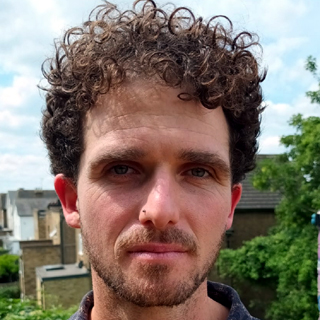
Harriet is a writer of fiction and poetry. Her work appears in New Letters, Mslexia and elsewhere, and she was a 2026 Sun Valley Writing Fellow. She is at work on a novel-in-stories following three generations of an Anglo-Irish family across continents; ‘Conamar’ is taken from that novel.

Conamar
Oisín picks you up from the airport without a word, and it’s a long two hours in the car going west, including the pub stop where he disappears and leaves you alone on a damp bench in the garden with two bags of Tayto and a red lemonade. Roses bud up a trellis: yellow, your favourite, and your mother’s. She always said they were lucky.
At home in Essex, the children will be back from school and arguing over the television and the best Beatle, and you will not be much missed, though at the hospital where you nurse they’ll curse your absence as the London flu fills the wards. But – like a child – you have come home.
After some time passes, you go inside the pub to find Oisín. The room is dark and clotted with smoke, a couple of old fellas in the corner ignoring the TV and you. Your mother used to tell you that women weren’t allowed in the pub. On the counter beside Oisín are the dregs of three pints.
There you are, you say.
Still, he will not talk. Grief has silenced your bright brother, and he will not ask about your husband William, or your children, or your work or life in England. He will not turn on the radio in the car. He stares straight ahead at the road: two lanes then dirt tracks, the world becoming harder to move through. So, you are silent. Your face is very clean and dry now, scrubbed and creamed before leaving for the airport in your good dress. You’ve eaten nothing since the telephone rang during the evening news.
It was your sister Máirín.
She said: Tá do mháthair marbh.
You said: Speak English.
Then your knees buckled. You pressed your forehead to the floor and breathed in old cigarettes and food from the fibres of the carpet. The receiver was silent, as if your sister had given up on you. The children became alarmed, raising their voices. William said your name three times. Your English name: Catherine. Catherine. Catherine. You had to be carried to bed. You did not move for a night and a day.
When you and Oisín arrive in Conamar, there’s the stillness. White church on the hill with small, high windows. Dark lush miles of fields, the shadowy humps of mountains. Everything wet: air on your face, shoes in the mud, a damp silence Oisín carries your bag up the trodden dirt path into the cottage, and you stand in the lane beside his car, as if you are not staying.
As the sky folds in and thickens, your father comes down the path on trembling legs. He was a labourer all his life, rented out by farms like an ox until his back packed in too early. He is not very old, but you would never know it to look at him. He stops at the bent wooden gate. He asks if you are tired, tuirseach. The old words blunder in your throat. He holds you carefully, as though it might break him.
Inside the cottage, your mother is laid out in the parlour, a small white room with a crucifix on the wall and a cold, ashy hearth. Her mending is still in a pile where she left it. Your first thought is that she has been here too long: she is beginning to smell. Your next is that she is gone, and this is her shadow; spare and vacant, her curls limp and greying, the neck obscenely loose and still. Hands crossed over heavy breasts like some statue.
Your mother was named Caitríona, like you, though once she was called Kitty. That was the name the rich English couple gave her when she was nine years old. They adopted her into the big house after her mother died of the flu, dressed her up in white lace and bought her a rocking horse; all before her older brother in the IRA came while they were all out on a Sunday drive and shot the Englishman and his wife dead on the road, leaving his little sister alone in the motor car between their bodies.
Kitty was taken first to be fostered by the nuns, then at sixteen by a young husband. She was pregnant almost every other year from seventeen to forty-five. Pregnant at the same time as you, once. William liked to joke about how often your parents must have been at it. Your father is a tall man, and for a time he still had his blond curls. He must have been a pleasure for your mother, once; perhaps her only one, besides her stories and legends. Now, she is dead.
Máirín arrives not long after you. Her husband John has driven them all the way from Basingstoke, over on the car ferry. You pronounce her name with an English accent, like William. She presses her lips together at that sound.
How are you, Cáit? Máirín says. No William?
No, you say.
Máirín can’t help smiling at that. She’s a bit jealous of everything you have. Your year living in America, your dyed-and-set hair, two beautiful children, and a schoolteacher husband. You’ve never told her or anyone else that you stopped making love with William altogether after you had the children, so afraid you were of a pregnant life like your mother’s. He’d slide into bed beside you naked, and you’d turn away if you were feeling cruel, or tense yourself up so hard inside that he had to stop. You’d do other things in bed, only not that. He’d said it was enough for him.
William had wanted to come with you to your mother’s funeral; it was you who refused. Why? he said. He was peeling potatoes, smelling of school dinners and motor oil, his face lined with exhaustion. William’s presence would be too large in the cottage; his English accent too loud, his confidence absurd. He does love you, in his way, but you could not find gentle words to explain that you have been married to him since the age of nineteen, and what was once between you seems to have hardened. Or that there is something else, something you fail to understand about yourself; some strange hunger. And so, you were cruel again, told him you didn’t need or want him to help you bury your mother. That you could stand doing some things alone.
Well, shall we go to the pub, boys? Máirín’s John says to the sunken faces of your father and brother.
Oisín finally speaks up, because John always buys the rounds: Sure, you’re on.
They tolerate him – another Englishman – in a way they never have your husband, because John is quite stupid and has a London accent and sells cars for his living. The men put on their coats and walk down the lane, a slow, frigid mile to O’Leary’s. You and Máirín sit in the kitchen and stare at the scratches in the ancient table, the old magic and names.
You go to the window and look at the empty washing line and the shadows of hedgerows and fields beyond. Your mother would point to the broad chestnut on the horizon and say, That’s the fairy tree, and you must never let them cut it down; that’s the hungry grass, it’ll curse you with a terrible famine if you step on it. You’d catch her watching after the painted wooden caravans trundling slowly down the lanes away from here. Your caravan would have yellow roses painted all round the door, you’d say, wrapping your tiny arms around her thick waist. Still, for all the smiles she had for you, your mother never had a caravan, nor anything much her own.
You get up to open the back door, then the front. Máirín tuts in the cold.
I’m letting the banshee in, you say. Or is it out?
All that rubbish, Máirín says, sighing.
But there is a sweetness in the cottage, coming from your mother’s body.
I’ll get some water from the well, shall I, you say.
Máirín laughs thinly. They’ve got it piped now. She goes out the back, and you hear the sound of running water. She comes in with a full pail. See? John paid for it all, she says. When you were away in America.
You dip a broken piece of carbolic soap in the pail of cold water. A smoky film settles on its surface. You find a clean rag too and soak it.
We’ll wash Mother, you say, for you are both nurses in London and have done the same for bodies you never even knew.
I can’t, Máirín says.
Jesus, you say. Then I will.
You carry the things into the parlour and set them beside your mother’s body. You know what to do, and it is right. Her hands are heavy. She has been dead long enough for her body to relax, and you are glad of it. You gently dab her wrists and the plump tops of her hands with the rose-scented water. You clean her thick nails, one by one. You cannot move the simple greenish wedding band that clasps the base of her finger tightly, so you clean around it. You clean the exposed skin of her pudgy neck and the hollows behind her ears. You dab her forehead, her cheeks, her closed eyelids. Máirín is afraid to touch her, but you are not. It is all you can do not to pick her up and hold her tight to your chest. You dry her gently with your handkerchief.
She dropped dead in the field, Máirín says in a thickened voice. She wasn’t even sick.
Will you cop on, you say, suddenly furious, because you both know sickness or wellness is nothing to death; you’ve seen toddlers brought in dead like that, all their bleeding on the inside.
You are still holding your mother’s icy hand. And you know that, in spite of everything, you will curl close to your sister for warmth tonight. You will breathe her cigarette and Elnett smell, bury yourself in her round arms and thick waist.
Beyond, there is a knock on the open front door. You go to it, crossing the small room in just a few steps. There is a man. He is skinny and tall, with dark grey curls covering his head and shoulders, his jowls. He wears big black boots with steel toes and no coat, only a fisherman’s jumper too big for his body and too short for his arms. Thin black-haired wrists stick out, with the hands shoved in dirty jean pockets. His eyes are sunken and purple-ringed, and somehow familiar.
He says, Táim anseo chun Caitríona a fheiceáil.
That’s me, you say.
Is Caitríona thú?the man says to you.
Yes, you say. I’m Caitríona.
Conas,he says, staring at you, and although he does not ask it, it is a question, and you understand. Your mother used to ask it often; instead of crying or railing, or shouting. How? she would ask your father, when his pay packet was drained at the pub and a week stretched ahead hungrily. How? she would ask you, when you let the hens loose out of carelessness, or burnt the ironing. You’d try to do things for her, but they often went wrong, and instead of Why? she would ask, Conas? How? As if that was all that mattered, the manner of things. As if any more would be too much to ask.
Is there something you want? you say in English.You’re trying to remember something. Not the cloying smell of your mother’s corpse, or your old life here with the peat-smelling commotion of the wind. No: words. Your mother tongue. Something about luck.
Cáit, says Máirín.
The man looks at Máirín with little interest. He says he is hungry. He asks if you have any food to spare. Then she tells him to get away. He mumbles something.
What? she says. Speak up, would you.
Anocht, he says, then. Tonight.
He turns and walks back down to the lane. You stare after him. The dank rag is still in your fist.
We should call the guards, Máirín says, holding herself. He’s been inside. Probably IRA. You see the tat on his wrist?
Remember what Mother used to say about thefear gorta, you say. He comes around looking for something to eat. It’s good fortune to feed him.
What’s come over you? Máirín says. We should call the guards.
You already said that, you say. Then you push past her and walk up the wooden steps to your parents’ bedroom. Your father built the steps and the wooden bedframe that sits low to the gaping floorboards. Your mother packed the mattress with rags and sewed it up herself, kept on mending it. You would creep up to this room as a child, on nights when she would cry herself to sleep because of the beast on her. Terrified, you would lay a shamrock beside her sleeping head, for a bit of luck that never seemed to come.
When you sit down on the bed, it is almost unbearably lumpy, and it smells. There are light brown stains all over the mattress from your mother’s miscarriages, from her being a woman who would bleed freely every month and bathe rarely, whose fingernails were always blackened with dirt.
There were all these things you had wanted her to see in America or England. Refrigerators, swimming pools, clean sheets, glistening Chinese food. You wanted to see her shuffle along some boardwalk, not even five feet tall in her Sunday shoes. Things like that. But your father wouldn’t have it.
You think about who the hungry man was to your mother. She was not brutal; she hated the St Stephen’s Day ritual when the village boys would stone frightened wrens from the hedges, feral with their want. And she wouldn’t stand to hit any of you or suffer your father to do it, though she wouldn’t go against the nuns at school. She’d nurse your beaten hands herself, wrap the welts in a poultice she made from wild plants. But she will never again touch your hands.
And tuirseachyou are now, from all that remembering. You fall asleep in your parents’ bed, but you don’t dream, and hours later you wake to blackness. Her smell is in your nostrils and on your hands: old sweat and iron.
You go downstairs. It is past nine, but the men are still not back from the pub. Máirín is asleep in a chair in the kitchen, wrapped in a dull knitted blanket with a shiny magazine in her lap. You look out into the lane. The man is there, leaning against the gate. The gorta.
You take a piece of bread from the tin in the kitchen. You put on your coat, leave the cottage and walk, fog-breathed, to the lane. You hold out the piece of bread. It’s luck you need, or whatever he has for you. But he only stares, his black eyes watery and dull. You shiver in your thin coat, your thin skin.
Labhair, you say: Speak. The old words unsnarling, coming to your lips. Cad atá uait? What is it you want?
The man takes the bread from your hand then. He mashes it in his open mouth. Scattered blackened teeth. Skin greenish, a shocking pale in the nothing-light of the lane. He thanks you. Your mother told you the gorta would be generous to those who fed him, but you are not sure how you want him to be generous when your kind of hunger has never been for a full belly, and nothing seems to sate it; not your husband or your children, or your silver jewellery or the hand-painted plates you brought home from America. The jugs of yellow roses William arranges for you only look sallow. The two-up-two-down terrace you own feels miniature. You feel an impulse, stronger every year, to break your own life into pieces.
Do you know me? you say.
He says that you are much younger than you should be now, and so he thinks you must be the ghost of Caitríona. He came back to take you away with him to America, but it must be too late. He has thought of you so often. He asks if you remember the yellow roses he used to steal so that you could wear them in your long black hair to Mass. Sister, he calls you.
Then you understand that the man is not talking to you, but to your mother.
Is it you? he says again. Caitríona?
Yes, you say. It’s me, I’m Caitríona.
He asks you to come with him for a drive. He opens the door of a banjaxed black Anglia. The inside of the car is full of rubbish, the windows filthy. Still, you are not afraid. You are following your hunger. Your reward, or hers. Isn’t that it?
You fold yourself in the passenger seat, your hands neat in your lap. You haven’t been alone in a car with a man except Oisín or William in your life. The man drives slowly, far up the Knockea road, until you reach the ruin of the big house that was burned out after the rich English couple were killed. It is a place you cannot imagine your mother in. But once, she was a child here, when her name was Kitty.
The man stops the car in overgrown remnants of gravel. His big hands rest on the wheel. The tattoo on his wrist flashes. He asks if you remember the woman who bore you. Sorcha, a wise woman who was killed by jealous men. How much did she love you.
I thought she died of the flu, you say.
He pounds the steering wheel with his fist. Sick jump in your chest at that.
He asks, is that what they told you? He says, don’t you remember anything, don’t you remember me? He says that those fuckers deserved what they got, them English Prods. That they took whatever they wanted. That you were just a little child and you needed your family, and they were out to ruin you so he shot them in their faces until there were no faces left, and you wore their dirty blood on your white Communion dress. That he saved your life that day he left you on the road.
Conas? you say.
He doesn’t explain how he saved your mother’s life. What he says, after a moment, is striapach bheag. An ugly phrase that was never spoken in your home when you were young. And you can feel that there is something heavy at your feet, like a bag full of guns.
Will you kill me now? you say. It comes out almost like a plea; not what you meant.
His big, skinny hand moves from the steering wheel to your thigh and squeezes. He says, Remember when I used to touch you like this?
In these moments, you are a wren. Brawling wings, tiny catastrophic heart, ambushed. But you cannot speak or move. The fear gorta is nothing but a legend, but this man is real.
His hand, real, moves higher, over your stockinged leg and the thin crotch of your underwear. He says, Remember this? My sweet little sister, so small.
In these moments, you understand that something in his touch is like the land. It is like the cottage; it is a home. Something your mother gave you in her blood. Hunger.
Touching you, the man tells you that he should have married you instead of letting those English heathen take you for their own. I’d have married you, my own little sister, he says. God forgive me. His breath coming harsh and foul, his movement quickening.
In these moments, you understand that – like the land – you will never be free. You close your legs around his hand. Black blood courses between you. In Irish you say: I forgive you. Will you take me home? Deartháir: Brother.
He asks you again to come with him, far away from here.
I’m not who you think I am, you say. Caitríona was my mother’s name. She’s dead.
Then he pulls his hand free, bruising your soft thighs; he leans across you and opens your door and tells you to get out of the car.
I should never have come back, he says. I should never.
He slams the door and starts the car, and the night air stings your face and hands as you watch his car become a smear of tail-light on the boreen, his bag of guns beside him.
You pick through vicious weeds to the broken stone steps, the shell of the house. You think that your mother sat here. She stood here. There is no light. Little shelter left, only blackened beams and rubble, birds startling in the dead ceiling, the sourness of mossy water, old stone and ferns growing in the great hearth. You think that your mother was small here. That this is what was taken from her. The faded scrap of wallpaper, peeling in a corner, has a pattern of yellow roses.
God, you say. His name is so easy in your mouth, though you haven’t been to Mass in years. But he isn’t real. There is nothing here but you.
You walk for hours, lost in the dark, and arrive back at the cottage at dawn. Your feet are soaked and blistered in your shoes. Máirín is making tea in the kitchen, cleaning the surfaces with a grim, blackened rag.
Where in God’s name were you? she says.
I went for a walk in the fields and it got too late you say. I slept in with some horses.
Aye, right! she says, tossing the rag in the sink.
Then you think what a fool your sister is, through and through. She has none of your mother’s strength, none of your father’s graft. She can’t even bear children. She could never carry your mother’s black secret like you can.
You don’t know yourself, you say.
It’s you that don’t, she says. You’re only going to ruin yourself and your husband, and do you not care at all for the children? Tá an bhéist ort, she says then. You’re cursed like Mam.
Fuck off, you say. I thought you didn’t believe in all that rubbish.
Fuck off,is it?, she says in a fake, drawling American accent.
Oisín comes into the kitchen from the fields. He smells of horses. He exercises them on a farm for a bit of money; he was going to be a jockey once, because none could ride like him. Your mother could ride too, but she stopped one day and never did it again.
What is it? Oisín says, looking between you. You’ll put an end to it, or you’ll have Da in a state, and I won’t be the one to smooth it.
Sure he doesn’t understand half what we’re saying anyway, you say.
Your William’s on his way with the children, Máirín says then. She pours Oisín a cup of tea, not you.
What? you say.
I gave him a ring. He says they’ll be here at five. They’ve come on the morning ferry.
Ah, Jesus, says Oisín. The Tan, is it. After I drove all that way to get her.
What else have you to be at? you say. Keep your traps shut, the both of you.
Your mother hated anger. She would walk straight out of the cottage into the fields when voices were raised. So you turn and go into the parlour, shut the door. Sit quiet with me a while and take a breath, that’s all, she would say. So you do. You sit with her stillness.
Later, William parks your car in a ditch up the boreen. Strange to see it here in Conamar, the pristine body of it smeared in country muck.
It’s all right, darling, William says as he holds you on the path. I knew you couldn’t do this alone.
At this you bite down on your lip so hard you make a sound, but he doesn’t seem to notice. You lean your head on his shoulder, though it does not give. His mother, who is still alive, survived an air raid with three small children, and one of them was him. He is not a soft man, your husband. But then, what man is soft?
Later the children run around the field like fat little feral dogs, cramming endless slices of bread into their mouths. Your father watches, silent and defeated. John and William talk about English football while Oisín ignores them. Then your father asks you for a word, for the first time since you’ve arrived.
You leave your family outside and follow him up the narrow stairs to the bedroom. He has emptied a shoebox of postcards onto the bed. You recognise their vivid colours and greetings, the things you’ve done and the places you’ve been. So many. He says he thought you might want them back – they are of no use to him – and that they were your mother’s. You pick one up. It is from Egypt, a picture of the Great Pyramid. On its back, your messy, joyful scrawl: So hot here, Mammy! They had a snake charmer and everything.
Your father tells you that he will never make sense of you or the damned life you have chosen.
The husbands sleep in the cars because the cottage is full. You sit up late, but when you sleep, you dream of your mother. She is riding the Ferris wheel on the boardwalk in California with your little girl. They are the same age. Her long black hair flies in the ocean breeze, and her dress is pure clean white, and she is laughing, and her name is Kitty.
You catch her in your arms. You whirl her in the air, marvelling at her lightness, her newness. Her laughter. There is no beast to be seen, nothing but the shimmering of her bright mind and all the good fortune she has come into.
Still, it always becomes morning.
The coffin they bring is plain, rough wood with your mother’s initials engraved on a lid that closes off her face forever. Your brother and father and your husband and your sister’s husband carry it on their shoulders to the chapel, the weight seeming too easy. You and Máirín walk behind it, holding hands tightly. You have forgiven each other, as you always will. The man who was your mother’s brother does not appear again. There was a report on the radio earlier about an overnight attack on a British Army border post. Savages, William said then, of your people.
The funeral is sparse. The old priest is dead and the new one is a young man up from Limerick, a city man who never met your mother. She is buried in the same cemetery as many members of your family. Children’s graves from the Famine, flu deaths. You could not find your grandmother Sorcha’s grave or any trace of her existence. The flowers thrown on the coffin are grimy white, and all wrong. Your mother might have hated them. Your father crouches over the muddy grave, buries his big-veined hands in the cold earth and the hungry grass. You are still now, and quiet. You remember the words your mother said to you every time you went away from here. Empty hands, no kiss for you but always the same blessing. Big luck!
The banshee only screams to mourn the true Irish, and it is screaming tonight over the fairy tree and the cottage, over your mother’s grave.
Only the wind, Máirín says, half-asleep, but you know.
You go downstairs. Your daughter is sleeping on a cot in the kitchen. She is always telling you to be more like normal mothers at school. English mothers. Sometimes it is easiest to love her when she is asleep.
You open the front door and see nothing but an empty lane. You check the silent parlour, but your mother is not there. She is standing in the kitchen next to your daughter, plain in the light of a full moon through dirty glass. She is giving a blessing without words, some ancient gift that you can never give. Some big luck. Perhaps it will keep your daughter safe. Perhaps your daughter will not grow up with the beast you carry on your back.
You wait for her to see you. To be your mother again, for one more moment in your life. But her spirit only vanishes, taken into air, where you cannot follow.
Other shortlisted stories:



The Brunel Prize Winner
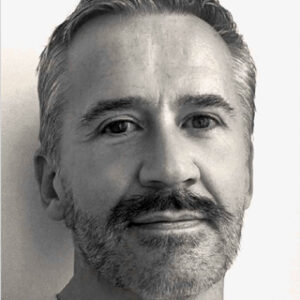
Rowan is a poet and tree surgeon living in East London. His work has recently been featured in 14 Magazine and Acumen. His poem ‘Wild Ghazal’ won second prize in the Shelley Memorial Project’s 2025 competition. He is currently working on a new pamphlet of compromised, radical ecopoems.