YOU IN THIS HOUSE
WE DON’T SAY I LOVE YOU IN THIS HOUSE BY ERWIN JOYCE CANLUBO
The story tells of an oppressive family environment, where rules affixed to the fridge door serve to control behaviours and stifle discord, ambitions and desires. The story was described as ‘powerful’, ‘innovative’ and ‘very confidently executed’ by the judging panel.
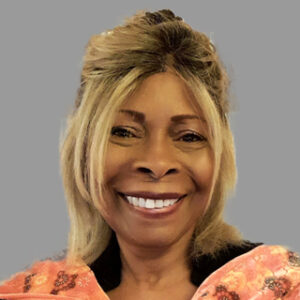
ERWIN JOYCE CANLUBO
Erwin Joyce G. Canlubo is a student and writer with plans to study Psychology at university. They are at the beginning of their writing journey. Canlubo’s work explores identity, queerness, and the quiet spaces between belonging and becoming. Guided by the values of competence, commitment, and compassion, they write with sincerity and empathy. Their stories search for connection, meaning, and the strength found in gentleness.

We Don’t Say I Love You in This House
The fridge is a liar.
It hums and whirs like it’s holding secrets, but the truth is plastered right there on its door, spelled out in fat black marker on curling bits of paper. Rules. Always rules.
Rule #1: No singing at the dinner table unless there’s a birthday celebration.
That one’s been there the longest, and it’s the one I keep threatening to erase whenever Mom isn’t looking. She thinks singing while chewing is “uncivilized.” I think she just doesn’t like being reminded that Dad can carry a tune better than her. They used to argue about that—who had the better voice—before they stopped singing altogether.
Rule #2: Don’t microwave fish unless you want the whole block to smell it.
That’s one of mine. Mom rolled her eyes but kept it up, probably because she knows it’s true. Our apartment’s walls are thin, and Mrs. Rosario from downstairs already hates us because she says we walk too loudly. Imagine giving her an anchovy-scented hallway, too.
Rule #3: If you leave a dish in the sink, you wash it before you sleep.
That one’s Dad’s. Or maybe Tito Ben’s. I can’t remember. Someone stuck it up after a party when the sink looked like a crime scene, plates crusted with spaghetti sauce and cigarette ashes in mugs. Dad doesn’t even smoke, but his friends do, and they always leave their mess behind.
The rules started as a joke—like a family sitcom gag. Then they just never stopped. Now the fridge looks like a collage of small tyrannies, each one a reminder of who we’re supposed to be in this house.
Sometimes I imagine a stranger coming in, reading them one by one, and thinking: “What a funny, quirky family.” They’d laugh at the fish rule, nod at the sink rule, maybe chuckle at the birthday singing one. They wouldn’t notice how the handwriting shifts from playful to sharp, how the newer notes are written in smaller, tighter letters, as if trying not to be overheard.
Rule #7: Don’t bring up the neighbour’s son’s wedding.
That one went up two summers ago. I knew it was about me the second Mom slapped it onto the fridge. She wrote it in her neat teacher’s handwriting, the kind she used to grade papers with.
“We’re not talking about it,” she said, like it was a math problem she didn’t want to solve.
The neighbour’s son married his boyfriend in a garden ceremony with fairy lights and too many flowers. I’d watched it from the window, biting into the inside of my cheek until it bled. Mom closed the curtains halfway through. Dad pretended he didn’t see.
Rule #10: If you wear something new, say you bought it on sale.
That one’s half a joke, half a survival tactic. We don’t have money for real shopping sprees, but Mom likes to “treat” me when she can—usually clearance racks and secondhand stores. Still, the rule stands: in this family, you don’t admit to wanting nice things. Wanting is dangerous.
There are more rules, of course. Whole sagas written in block letters. But my favourite isn’t even on the fridge. It’s the unwritten one: We don’t say I love you in this house.
It’s not like I’ve never heard the words. I’ve heard them in movies, in the muffled phone calls my friends make to their moms, in the sloppy drunk confessions of classmates. Just not here. Here, we say things like Did you eat? or Bring a jacket or Don’t stay out too late. Care is folded into commands, affection disguised as irritation.
The fridge rules are the purest version of that. They’re instructions pretending to be guidance, restrictions pretending to be love.
Sometimes I wonder what would happen if I stuck up my own rule: Say what you mean. Would it stay? Or would someone peel it down before the marker even dried?
The fridge was my first confessional booth. Every night after dinner, I’d sneak a fresh sticky note from the drawer and scribble something ridiculous, hoping to get a laugh.
Rule: Whoever farts at the table has to clear the plates.
Rule: No math homework before dessert.
Rule: Stop calling me “bunso,” I’m taller than Kuya now.
Those never stayed longer than a day. Dad would smirk, Mom would scold me, and my brother would roll his eyes. Then they’d disappear, crumpled in the bin, replaced by something practical. Practical always wins in this house.
Still, every once in a while, I slip one in when no one’s watching. Just to prove I exist.
The first time I realized the fridge wasn’t just a joke anymore was the day Rule #13 appeared: Don’t talk back when Dad is tired.
It was written in Mom’s handwriting but posted like Dad’s law. The timing was obvious—he’d come home from work furious about some overtime shift and yelled at Kuya for leaving his basketball shoes in the hallway. Kuya yelled back, and for a moment, I thought Dad might actually hit him. He didn’t. But the next day, the new rule appeared, and everyone pretended it had always been there.
I remember staring at it, the marker lines a little shaky, like Mom’s hand trembled as she wrote it. I wanted to ask her, Why not write “Don’t yell at your kids when you’re tired” instead? But we don’t say things like that.
We don’t say a lot of things.
My friends think the fridge is hilarious. Yasmin came over once and took a picture of it, said it looked like something out of a sitcom.
“You should make it a TikTok,” she laughed. “Like, ‘My family’s house rules, you won’t believe #7!’”
I laughed too, but the sound scraped my throat.
The truth is, if you read the rules in order, they tell a story. And like all stories, ours has a beginning, middle, and end.
And that’s when I started writing my own rules again. But not funny ones. Real ones. Ones I’d never stick on the fridge because I don’t want them erased. I write them in a notebook I hide under my mattress.
Rule: If you kiss someone, do it in the dark, where no one can see.
Rule: If you bring someone home, call them your “friend” until your tongue bleeds.
Rule: If you want to tell your brother, don’t. He’ll only tell Dad.
Sometimes I wonder if anyone else in this house is keeping their own secret list.
One night, while washing dishes, I caught Kuya staring at the fridge. His eyes lingered on Rule #13, and for a second, I thought I saw something like anger in his face. But then he shrugged and went back to scrolling his phone.
“Why do we even keep those up?” I asked.
He didn’t look at me. “Because Mom likes them.”
“Do you?”
“They’re just rules.”
That was the end of that conversation. But I couldn’t shake the thought: if they’re just rules, why do they feel like bars on a cage?
That summer, a new rule appeared, written in Dad’s handwriting for once.
Rule #17: If you get hurt, wash the blood off before I get home.
I don’t know what scared me more…that he wrote it, or that Mom let it stay.
Rule #18: Don’t stay out past nine unless you want the neighbours talking.
That one was mine. I stuck it up one Friday night when Mom was waiting on the sofa, arms crossed, after I came home from Yasmin’s birthday. I was only late by twenty minutes, but she looked at me like I’d burned the house down. I figured a rule would make it official, like curfews written in ink. She didn’t laugh. She didn’t tear it down, either.
The fridge rules don’t disappear anymore. They accumulate, like mould creeping across a wall. The more rules we added, the less we had to talk to each other.
When Kuya failed his first college subject, no one yelled. No one comforted him, either. The next day, a new slip appeared: No PS4 until your grades are fixed.
When Mom and Dad had their loudest fight—something about money, it’s always about money—the morning after, there was: Don’t slam doors, it wakes the neighbours.
When I came home from school with a split lip, Mom didn’t ask me what happened. She just pressed a frozen spoon against it and muttered, “Careful who you talk to.” By the next morning: If you fight, make sure you win.
I wasn’t sure if it was meant for me or Dad.
Sometimes, I imagine tearing them all down, one by one, until the fridge door is bare and gleaming. But then what? The silence would be worse.
Rule #22: If you wear lipstick, wipe it off before Dad sees.
That one never made it to the fridge. I wrote it in my notebook after Yasmin dared me to try hers in the school bathroom. A deep plum shade, too bold for me. I laughed as I smeared it across my mouth, but when I caught my reflection, something in me stilled.
I didn’t want to wipe it off. Not yet.
On the jeep ride home, I rubbed my lips against the back of my hand until the color faded. My skin smelled like wax and flowers all night.
Kuya caught me once, scribbling in the notebook under my blanket. “What are you writing?” he asked.
“Nothing. Rules.”
He snorted. “Don’t we have enough already?”
“Not these kind.”
He shrugged, uninterested, but I caught him later that week staring at the notebook on my desk. He didn’t touch it. Just looked at it like it was something dangerous.
Rule #25: Don’t mention Dad’s drinking.
This one wasn’t written. It didn’t need to be.
The first time I smelled the liquor on his breath, I thought maybe he’d gone out with friends. But then it happened again. And again. And soon, Mom started buying mints in bulk, slipping them into the kitchen drawer like bribes.
Nobody talks about it. Nobody needs to. We’ve all memorized the rule.
One night, I came home later than nine. Not much later—just past ten—but the air in the house was already heavy, swollen with the smell of beer. Dad sat in the living room, eyes glazed, TV flickering against his face.
“Where were you?” His voice was calm, too calm.
“At Yasmin’s. Group project.”
He stared at me. Then his eyes dropped to my shoes. White sneakers, scuffed but clean. Too clean. Like I’d wiped them down before walking in. Like maybe I had something to hide.
His jaw tightened. “Don’t lie.”
“I’m not.”
That night, no new rule appeared. But the silence felt like one.
Rule #28: Never bring friends inside if Dad’s home.
I added that one in my notebook after Kai walked me home once and Dad opened the door. Kai smiled, offered his hand. Dad didn’t take it. He just looked at him—up, down, dismissive—and shut the door without a word.
Later, over dinner, he asked, “That boy—he your boyfriend?” My spoon clattered against my plate. “No. He’s just a friend.”
Kuya chuckled under his breath. Mom’s eyes flickered to mine, then down to her rice. No one pushed further.
Still, the rule was clear.
By the time I turned seventeen, the fridge was covered in layers of paper. New rules plastered over old ones, corners curling, tape yellowing. Some were half-torn, others faded into illegibility. A graveyard of commands.
But a few always remained visible. Dad’s sink rule. Mom’s wedding rule. The tired rule. Like pillars holding the whole thing up.
And me, watching them every morning as I poured my coffee, feeling smaller and smaller.
Rule #31: Don’t make Dad choose between his kids.
I didn’t write it. Kuya did. I recognized his handwriting, crooked and careless. He stuck it up one evening after Dad accused him of stealing money from his wallet. Kuya swore it wasn’t him, and Dad turned to me.
“Did you take it?”
My throat closed. I shook my head.
Kuya’s eyes were burning. “Why do you believe him and not me?”
No one answered. By the next day, the rule was there, jagged in black marker. It stayed.
Rule #34: If you get caught, deny everything.
I broke that one.
It was after graduation practice, a humid afternoon that clung to my skin. Kai walked me home again, and we stopped by the sari-sari store for ice candy. He laughed when mine dripped down my chin, reached out, and wiped it with his thumb.
It was nothing. It was everything.
Mrs. Rosario saw us, of course. She always sees everything. By nightfall, Mom’s voice was sharp, Dad’s was thunder, and Kuya’s silence was heavier than either.
“You think people won’t talk?” Mom hissed, slamming dishes into the sink. “They already are,” Dad said.
I wanted to scream that it wasn’t shameful, that it wasn’t dirty, that it was just me, just who I was. But all that came out was silence.
The next morning, a new rule appeared: No visitors after school.
I didn’t argue. I didn’t cry. I just opened my notebook and wrote the truth.
Rule: We don’t say I love you in this house.
Rule: But we don’t say I hate you, either.
Rule: Silence can mean both.
Rule #35: Keep your phone face down at the table.
That one came after Dad caught Kuya grinning at a message during dinner. He demanded to know who it was from, what was so funny. Kuya muttered “none of your business,” and the tension stretched so tight I thought the plates would shatter.
Mom wrote the new rule that night, slid it onto the fridge like a bandage. As if black marker could erase suspicion.
By then, the rules weren’t funny anymore. They weren’t even about fish or dishes or curfews. They were reminders: You live here. You follow us. You stay small.
Rule #37: Don’t cry where anyone can hear you.
That one’s mine. Not on the fridge, just in the notebook. I learned it the night Dad yelled at me about Kai. He said it loud enough for the neighbors to hear, so Mrs. Rosario would have another story to tell.
“You think you can live that way under my roof?” he shouted, slamming his hand on the table. The plates rattled, water sloshed from my glass.
I wanted to tell him yes. I wanted to say it’s not a choice, it’s not something I can fold neatly away like laundry. But the words stuck in my throat.
So I waited until midnight, pressed my face into the pillow, and sobbed as quietly as I could.
The fridge hummed in the dark, rules glowing faintly in the streetlight. They felt like eyes, watching, judging, recording.
Rule #40: If you get hit, don’t hit back.
That one scared me the most. Not because of what it said, but because of who wrote it. Kuya.
His knuckles were split open when I saw him scribbling it down, tape tearing from the dispenser. He didn’t look at me as he stuck it on the fridge, blood crusting in the lines of his hand.
“Kuya,” I whispered.
He shook his head. “Don’t.”
The next morning, the rule was gone. Torn down. But I could still see the tape marks, a ghost of what he’d tried to say.
Silence is the thickest rule of all.
Rule #42: Don’t let outsiders know your business.
This one came after a guidance counselor called the house. She wanted to “check in” after I turned in an essay about “family structures.” I’d written it half as a joke, half as a cry for help. She didn’t laugh.
Mom did, though. A sharp, bitter laugh when she hung up the phone.
“You think our life is some sob story for your teacher?” she snapped. “You think strangers care about you more than your own family?”
I didn’t answer. Because the truth was yes. Sometimes I did.
The rule appeared the next day, bold letters in Dad’s handwriting. Outsiders don’t need to know. Outsiders can’t understand.
But what if the problem isn’t outside?
Rule #45: Don’t touch the fridge unless you’re adding food.
Dad said that one after Kuya tried to peel down a rule. I don’t even remember which one—it didn’t matter. What mattered was that Dad saw him, grabbed his wrist, and hissed through his teeth: “You think you can change this house?”
Kuya didn’t answer. He didn’t fight. He just went to his room and slammed the door.
The rule appeared later that night, posted like a lock. The fridge was no longer a joke, no longer a wall of quirks. It was law.
And still, I couldn’t stop myself.
One night, after everyone was asleep, I crept into the kitchen. The tiles were cold against my bare feet. The fridge hummed in the silence, papers fluttering slightly in the fan’s breeze.
I tore off a sticky note and wrote: Say what you mean.
I pressed it to the centre of the fridge, covering half of Dad’s tired rule. My heart pounded so hard I thought it would wake the whole house.
In the morning, it was gone. No one mentioned it. But I noticed the trash bin had been emptied, every scrap taken out.
Rule #47: Never embarrass the family in public.
That one landed after Parent-Teacher Day. Mom didn’t like how Yasmin hugged me in front of everyone. She pulled me aside, smiled tight, and whispered: “Do you want people talking?”
I wanted to say yes. I wanted people to talk, because maybe then I wouldn’t feel so invisible. But I didn’t.
The rule was up by dinner.
The fridge became unbearable.
Every time I opened it for milk, I was smothered. Every sticky note was a hand over my mouth, every strip of tape a chain across my chest.
So I started thinking about leaving.
Rule #50: If you leave, don’t come back.
I wrote that one in the notebook after Kai told me about his cousin in London. How she moved out, started fresh, carved a life with nothing but grit and savings.
“She said it was like breathing for the first time,” he told me, eyes shining.
I imagined it. A place with no fridge rules, no silence disguised as love. A place where I could put up any note I wanted, and it would stay.
I wanted it so badly my ribs ached.
Then came the breaking point.
It was an ordinary Thursday. I came home late—an hour, maybe more. Dad was waiting. His eyes were bloodshot, his fists clenched.
“Where were you?”
“At school. Practice.”
He didn’t believe me. He didn’t want to.
His hand moved faster than I could think. The slap cracked across my cheek, my head snapping sideways. The sound rang louder than his voice, louder than the fridge’s hum.
For a second, the world tilted. Then silence.
I don’t remember what he said after. I just remember Kuya stepping between us, his shoulders wide, his voice low. “Enough.”
Dad stared at him. For a long, dangerous moment, I thought it would get worse. Then he turned, muttered something under his breath, and walked away.
The kitchen was thick with quiet. Kuya touched my shoulder, gentle where Dad hadn’t been. “Go to your room,” he said.
But I didn’t. Not yet.
Instead, I grabbed a sticky note. My hand shook as I wrote, letters jagged, ink smudging.
Rule: If you hurt me, I won’t stay silent.
I slapped it on the fridge, right in the middle. My cheek burned, my chest heaved, but for once, the rule was mine.
And I didn’t care if it disappeared by morning. The note stayed up longer than I expected.
Two days. That’s all. Long enough for me to memorize the way the ink bled into the paper, the shaky lines of my defiance. Long enough for me to start hoping maybe—just maybe—this one would survive.
On the third morning, it was gone.
In its place: Rule #53: Respect your father.
The letters were thick, pressed hard, as if Dad wanted to carve them into the fridge itself.
I stood there with the door half open, milk sweating in my hand, my face reflected faintly in the chrome. For a moment, I thought about ripping every single paper down. Just tearing and tearing until nothing was left but metal.
But I didn’t.
Because I knew what would happen. The silence after would be worse than the noise.
Rule #54: Don’t make your mother choose sides.
That one appeared a week later, after she pulled me aside in the kitchen. Her hands were shaking as she smoothed the dish towel.
“Don’t fight with him,” she whispered. “Please. It only makes things worse.”
Her eyes darted toward the living room, where Dad was snoring in front of the TV. “I’m not fighting,” I wanted to say. “I’m just existing.”
But what good were those words in a house where everything true had to be rewritten as a rule?
The fridge was almost covered now, a mosaic of commands. Old rules peeking from under new ones, scraps of history layered like sediment. You could still see the fish one, the singing one, the lipstick one—if you knew where to look.
Sometimes I traced the outlines of the tape with my finger, like they were braille, like they might spell out something else if I just touched them the right way.
But they always said the same thing: Stay small. Stay silent. Stay invisible.
Rule #57: If you get hurt, don’t expect an apology.
That one wasn’t written anywhere. It didn’t need to be.
I carried it on my cheekbone for days, purple blooming into yellow, until it faded into skin again. No one mentioned it. Not Kuya. Not Mom. Not even me.
Especially not me.
Then one night, I couldn’t sleep. The fridge’s hum was too loud, too steady, like a heartbeat that wasn’t mine. I crept out of bed, notebook in hand, and stood before it.
For the first time, I wasn’t afraid.
I pulled a fresh page, scribbled fast, words tumbling out of me. Rule: If you leave, take something to remember yourself by. I ripped the page and pressed it to the fridge. Tape, slap, done.
I stood there a long time, staring at it, daring anyone to wake up and stop me. No one did. By morning, it was gone.
But something else was in its place. Not in Dad’s writing. Not in Mom’s. In Kuya’s.
Rule #59: If you can’t breathe here, find air somewhere else.
The letters were crooked, careless, but they might as well have been carved into stone. For the first time, I didn’t feel alone.
That was the last new rule I ever saw.
Not because we ran out of paper. Not because the fridge stopped humming. But because after that, the house changed. Quietly, like a rope snapping under too much weight.
Dad drank more. Mom prayed louder. Kuya stayed out later. And me? I started saving. Coins in a jar, bills folded into books, hope tucked under my mattress like contraband.
The rules kept yellowing, curling, sagging under their own gravity. But no one touched them. Not even Dad.
It was like we were all waiting for something.
I don’t know which of us wrote the last one.
One morning, it was just there. Crooked, hurried, stuck at the very bottom corner where no one would notice unless they bent down.
It said: Rule: If you…
Nothing else. Just those two words, marker trailing off into a smear.
I stared at it for a long time, knees pressed into the cold tile, trying to imagine the ending. If you what? If you leave? If you stay? If you love?
The fridge didn’t answer. It just hummed, steady and indifferent, as if mocking me. I thought about finishing it. Writing the words myself. But my hand wouldn’t move. Because maybe the rule wasn’t unfinished at all.
Maybe it was waiting.
That night, I opened the notebook and wrote my final entry.
Rule: Don’t wait forever.
Then I closed it, slid it under my mattress, and tried to sleep.
The fridge hummed in the dark. The rules rustled faintly in the breeze. And somewhere between waking and dreaming, I decided: unfinished things can still be endings.
You can download and read “We Don’t Say I Love You in This House” here.