INVISIBLE STORM BY HƯƠNG NGUYEN
In this non-fiction story, Nguyen recalls growing up in Northern Vietnam in the 1980s as one of four daughters, at a time when boys were preferred and a two-child policy was in effect. Suffering from seemingly unexplainable fatigue, a diagnosis after moving to the UK reveals the presence of an autoimmune disease. Against the advice of doctors, Nguyen gives birth to a second healthy child: a daughter. ‘Invisible Storm’ is a story of hardship, the trials we face in life and how joy can be found amidst the most challenging of circumstances. The judges described Nguyen’s writing as ‘impressively fearless, as though nothing is off limits’.
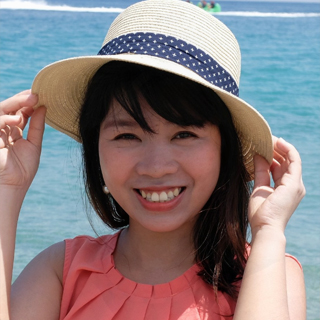
HƯƠNG NGUYEN
Hương Nguyễn (Lucy), originally from Vietnam, studied Linguistics at Hanoi National University and was awarded a Fulbright scholarship in 2015 to work at the University of Wisconsin–Madison, USA. She spent over ten years teaching as a lecturer in Vietnam before relocating to the United Kingdom. Her creative work focuses on writing and illustration, particularly stories for children. She has completed the HarperCollins Author Academy courses in Writing for Children and Non-Fiction Writing.
Invisible Storm
Prologue
It was an ordinary afternoon, but there was something heavy in the air – thick, humid, a warmth that pressed against the skin, making it sticky and damp. The skies were a milky blue, yet big, heavy clouds were gathering on the horizon, slowly piling up and turning grey. Occasional light breezes rustled through the broad banana leaves and the tops of nearby coconut trees, offering a fleeting moment of relief.
Beneath the shade of a majestic tamarind tree, a group of little girls sat in a circle on a woven rattan mat, completely absorbed in their game with their dolls: some made of cloth, some recycled, and one imitation Barbie doll. Their small voices and giggles blending with the chorus of cicadas.
I stood a few feet away, quietly looking on, a rush of loneliness tugging at my heart. I was dying to reach out and feel the silky texture of the Barbie doll’s beautiful golden hair, to comb it with my fingertips and pretend I belonged in their world, just for a moment. But I didn’t dare. I was afraid I might break the magic or be rebuffed.
Still, I couldn’t help but step forward slowly, almost reluctantly. As I drew near, the children exchanged glances, fell silent, and then inched away, placing their dolls safely out of reach. From that moment on, I kept my distance, a silent shadow that nobody noticed, or chose to see, quietly watching from afar.
Across the horizon, clouds continued to pile up, growing heavy with rain. The breezes grew sharper, tugging at the children’s hair. The first drops fell – big, warm drops that pocked the earth – and the children sprang up, gathering their dolls and scampering toward their homes. The refreshing petrichor that filled the air still lingered. I remained where I was, letting the rain seep into my skin, a solitary figure fading into the growing storm.
Invisible
I have always felt invisible. When I was a newborn, my mother had to hide me for fear of losing her job – because of the two-child policy in Northern Vietnam during the 1980s. Driven by a culture that prized sons above all, my parents kept trying, hoping, waiting. I was their fourth daughter – the ultimate disappointment in the eyes of a society that measured worth by gender. My birth wasn’t announced with joy but concealed with silence. While other babies were celebrated, I was hidden in a makeshift crib beneath the bed, lulled to sleep not by lullabies but by whispers of caution. When my father’s colleagues made a surprise visit, my mother hushed me in the bedroom. I was a very good baby. I was so silent indeed, nobody knew I existed.
When I was a toddler, my mother lost her accountancy job. She’d sent my eldest sister away to lessen the suspicion, but it wasn’t enough. Our relatives avoided us, as though our family were tainted by the absence of a son. I tried to tag along with my cousins, but their parents steered them away. When I was about to start nursery, we moved from the countryside to an industrial town. The town was a landscape of factory chimneys, warehouse roofs, and railway lines – a place where delivery trucks rumbled down the main road, and the scent of oil and machinery filled the breeze.
My mum tried to quiet us as we vigorously scraped the last bits of burnt-on rice off the pot:
“Kids! Shush! Don’t make such a noise!”
“Why not, mother?”
“The neighbours will hear and think we don’t have enough food!”
But we all knew we didn’t. Our new neighbours wouldn’t befriend us anyway. Their children, who were my age, kept their distance. To them, I was invisible. I went to nursery with a group of kids whose parents exchanged business cards at drop-off, discussed golf memberships, and made plans for weekend trips to beach resorts I hadn’t even heard of. Among them were Son and Minh – two boys who were always together, the kind who seemed to exist in their own world of happiness and ease. I remember glancing at their spotless clothes, at the confidence in their voices, the happiness that glowed from within. I was the complete opposite. My hand-me down shirt was often rumpled, my shoes scuffed, my hair a mess. I was quiet, awkward, unsure of myself – a kid who didn’t quite belong in that world.
I was invisible – and I carried another invisible companion: fatigue. Constant, quiet, and unnoticed by everyone but me. At first, I thought I was just tired. Lazy, even. That’s what people said. But this companion – this fatigue – never left. I learned early how to keep my exhaustion hidden, how to smile while silently falling apart. But the worst part was the performance – the cheerful mask I wore so others wouldn’t feel uneasy. It was pretending to be fine, so I wouldn’t add to the burden of a mother already weighed down by her own struggles.
My mother had to resort to doing various jobs. At first, she tried being a tailor. Nobody bought her clothes. We had hand-made tailored clothes instead. We did not wear the same clothes as our friends, and I always secretly looked at the clothes they had bought at the supermarket with an envious eye. I always felt that I was too different from them. I wished I had the same clothes as them. After a while, my mother tried opening a street business, selling snacks, fruit and cigarettes. It was not very successful. Finally, she noticed that truck drivers who worked for the cement factory stole petrol from the trucks they drove. They siphoned it off and took it to their houses secretly, stored it illegally there and sold it off at a lower price. My mother decided to be a part of that cycle like many other local people in our neighbourhood who did not have a conventional job. So, every day, she sent us, my nine-year-old sister and I, six years old, to truck drivers’ houses in a remote mountainous area to check if they had stock available. If no, we went home, told my mother and that was that. We rode along on our dainty children’s bicycles as large trucks carrying rocks and other materials for the factory thundered dangerously by us. It was fun for us though. However, if we went home and said there was some stock, my mother would cycle to their houses with three 20-litre cans on the back of her bike and brought back 60 litres of petrol each trip. She travelled about five miles each time. We stored the fuel in our house and resold it to any drivers who wanted it at a lower price than that of a standard petrol station. The job kept us going for a while and it was part of our daily life; being a messenger for my mother’s business for years.
One day, I was at school in my third grade. The lesson that day was about family size. Our gentle but strict teacher read the textbook, dictated it for us to take notes. At the end of the lesson, after summarizing the lesson, she did a little survey and asked, “Class, how many siblings have you got?”
She continued, “If you haven’t got any siblings, stand up, please!”
Half of the class members stood up.
“If you have one sibling, please stand up!”
Son and Minh stood up at the same time with a further quarter of the class.
“If you have got two siblings, please stand up!”
Everyone else stood up, except me.
And after a long wait, I sprang up like an arrow released from the strain of the bowstring when the teacher asked those with three siblings to stand up. Finally, it was my turn. I grinned like a loon.
“I have got three sisters.”, I said quite proudly.
My teacher looked at me over the top of her glasses. After a moment of silence, her eyes sparkled with interest, I supposed. I enjoyed being the centre of attention because all my classmates who were sitting back down now steadily gazed up at me without blinking.
The teacher softly asked, “What does your mother do, my dear?”
Her voice was strangely light. It didn’t sound like her the previous day when she barked at me that I had to get to school on time. I had been late because I had been acting as a messenger for my mother’s enterprise.
I replied without any hesitation,
“My mother is a petrol dealer.”
Obviously, my teacher had never heard of that job before. She just opened her eyes wide and then blinked them non-stop. She stuttered in a funny sort of way, “A petrol…a petrol what?”. My teacher had never acted like that before. She had always been sure of what she was going to say. But now, she obviously needed my help. So, I helpfully explained in detail what a petrol dealer did or what my mother did.
“Uh, OK,” my teacher finally managed to say. She seemed genuinely impressed. That really made me smile. After, my classmates gathered around me and asked curious questions about my mother’s job.
Little did I know that, as I was telling my classmates what my mother did, my house was on fire. My sister had cooked dinner, using wood logs as fuel. The flames from the burning logs had caught the tank where my mother stored the petrol she had bought earlier and it had started a blazing fire. The fire turned our kitchen into a sea of flames. It devoured everything in its path and it was going to consume our whole house. Luckily, our kind neighbours helped us to put out the fire with cans of water. That night, my mother was exhausted after cleaning up the mess of the blazing inferno. She went over to our neighbours’ to say sorry and thanks. We had dinner in the smoggy haze emitted from the still hot coals left over. I was so excited to go to school the following day because I couldn’t wait to tell them about the fire. They would be so impressed! Actually, they really were!
It was typical me. I tried my best to impress others. I was fully aware that I was poor, I was small, I was weak, I was weird – but I decided I would be good at something in order to earn a bit of respect from my classmates. So I turned all my energy toward my studies. I fought to be at the top of the class.
When I went to secondary school, I kept trying, and one day I entered a school competition – and I was one of the three winners. On the stage, I was placed between two boys. One of the boys was Minh, the rich kid. I looked out at the cheering crowd. The moment was overwhelming, almost magical – a rush of happiness, a feeling I hadn’t completely lost. The spotlights glowed warmly, the applause washed over me, and I felt, for the first time, that I mattered. I saw Son among the audience. He cheered boldly and smiled without reserve – his happiness for us pure and unfiltered. It was a moment I wished I could hold on to forever – a moment when I was not a shadow, but someone worth noticing. I remember thinking, “Maybe if I keep trying, I can be less invisible.”
Years later, at sixteen, I left home to attend a grammar school in a big city. I said goodbye to my family and friends, losing touch with most of my classmates along the way. In that vast, unfamiliar place, I felt even smaller – and more exhausted. I remained invisible, as did my fatigue. Sometimes, I coughed up streaks of blood. Still, I poured every ounce of my limited energy into one mission: getting into university. Eventually, I was accepted into a top university – the only way I knew to prove I was worth something.
One day in the dormitory, there was a timid knock at my door. Earlier that morning, a rash had bloomed across my face – an angry riot of red blotches that made me want to crawl beneath the sheets and vanish. With a sigh, I opened the door. Standing there was a young man I didn’t recognize at first. He paused on the threshold, caught off guard. His eyes searched my face, uncertain. I noticed a nervous glimmer in his eyes.
“Hi, Huong.” he finally said.
“Hi…” I felt a bit feverish, the warmth creeping up under my skin.
He paused.
“Do you remember me?” he asked quietly, hopefully.
I nodded, reluctantly.
“Yes… I think I went to nursery with you… and secondary, too.”
He pressed on. “What’s my name, then?”.
His voice a mixture of nervousness and hope. But obviously, he wanted to test me. Well, I liked tests. After all, tests were the only thing I was good at. And I wanted to pass this test quickly – I was so hot and so weary. The rash made my face burn – I was surprised it hadn’t started to sizzle. My mind darted back through my memories, and I saw two boys always together in nursery, side by side, nearly inseparable. Without thinking, I blurted, “Of course – you’re Son, right?”
He dropped his gaze in disappointment. Without a word, he turned, and walked away. Son was his best friend’s name – not his. He was Minh. I hadn’t remembered his name – and it put him off, closing a moment I hadn’t even realized I was missing.
Years later, while catching up with childhood friends, I learned something I hadn’t noticed back then: at that school prize ceremony, Minh had almost reached out to hold my hand. He had always regretted not summoning the courage. All those years, he’d hoped to see me again – so much so that he was determined to get into university just to find me and ask me out. But that hope faltered the day he finally saw me again – my face blooming with a rash. Not exactly the look you hope to wear when someone crosses time to find you. And my terrible memory didn’t help.
Early signs
Throughout my childhood and adolescence, I always felt strange in my own skin – as if something were fundamentally wrong with me. Was it poverty? An inferiority complex? Or something even deeper? Then the fevers came. My lymph nodes swelled up along my neck. The doctor suspected TB lymphadenitis. I underwent a biopsy – but it was not TB. Later, a lump appeared in my breast. Another biopsy. Not cancer. I considered myself lucky. But the fatigue stayed. The rashes came and went, a fleeting manifestation of something I couldn’t name. My hair fell out in clumps, carpeting the floor in black, moss-like formations – a silent trail of the weakness I carried within me.
In 2018, I moved to the UK and gave birth. The delivery was traumatic. I lost nearly two litres of blood. Afterwards came so many blood tests. The more they took, the harder it became to find a vein. One nurse looked at my bruised, collapsed arms and said: “We’ll have to try again another time. I can’t get anything out.” On the third attempt, a slow trickle finally came. They gave me iron tablets to rebuild my blood. I took a job at a supermarket café to make ends meet. As an immigrant, I worked long hours for minimum wage. By the end of each day, I often felt feverish and worn out – but the thought of my daughter Anna, and the way her face lit up when I brought home another Barbie doll for her collection, kept me going. I ignored the fevers and the fatigue. After all, fatigue was nothing new. It had been with me my whole life. Then one day, I found another lump in my breast. And more beneath my arm. Another biopsy. Still nothing. Not cancer. I felt lucky again.
When the Storm Has No Name
“You have lupus SLE.” The words landed heavily, but their weight didn’t register until later. In the sterile quiet of the clinic, I nodded, as if I understood. But I didn’t. I went home and looked it up. Systemic lupus erythematosus. A chronic autoimmune disease. No cure. Lifelong. My body, attacking itself. Tissue and organ damage. Sometimes life-threatening.
It felt as if I had just been handed a life sentence, invisible but absolute. My heart pounded. The more I read, the darker it got. Lupus SLE doesn’t play fair. It doesn’t follow rules. One day, you feel fine, normal, even joyful. The next, you’re curled up in bed, joints burning like fire, every limb aching as if gravity itself has grown heavier. Fatigue blankets you so thickly you can barely lift your head. It’s not like being tired. It’s like being gradually erased. And the scariest part? It’s unpredictable. Lupus flares come out of nowhere. It’s like living under a sky where dark clouds are always present, even if hidden. The storm doesn’t always show, but it’s never gone. You learn to live braced for thunder. You learn to smile through the sunshine, knowing it might vanish before you know it.
When the diagnosis was confirmed, the doctor looked at me with something between concern and command.
“You shouldn’t try for another baby right now,” she said.
“But I’m thirty-five,” I replied, panic rising in my throat. “My husband is forty-three. We’re getting old. We don’t have time.”
“You have uncontrollable inflammation,” she said. “It’s too dangerous right now.”
My husband leaned forward, urgently and impatiently. “So when can we have a baby?”
“When I tell you so,” the doctor snapped.
Her words hit like a slap. I blinked hard to hold back tears, but they came anyway – hot, bitter, and unrelenting. Why me? Why this? Why now? And then, from somewhere deep inside, a quieter voice whispered: At least now, I know what’s been wrong all along. All those years of unexplained exhaustion. The mysterious rashes. The days I could barely get out of bed. The headaches. The stiffness in my joints. The numb fingers. The overwhelming, bone-deep fatigue I thought was laziness or depression. When I was breastfeeding my newborn daughter in the darkness of night, my mind raced through an endless list of ways she might die: I might drop her on the hard floor, make her choke, accidentally smother her, or trip and crush her. I thought it was just the baby blues. But many nights, I lay awake beside my sleeping baby, haunted by the image of a malicious face with a wicked grin and other disturbing visions. I would lie completely still, feeling my head spin and my body swell until it felt like a giant balloon, drifting up toward the ceiling. I didn’t know how to describe it when I talked to my husband. Now it had a name. Hallucinations can be a part of lupus when the disease affects the central nervous system. My brain sent SOS signals – urgent, confusing, and terrifying.
I remember going to an open-air market with my mother one day when I was seven. I thought it was a special treat – an outing just for me. A chance to see Barbie dolls I never dreamt of owning. To marvel at sweets I never imagined tasting. To admire beautiful dresses I never hoped to wear. But my mother had taken me for a different reason. She didn’t want to pay the parking fee, so she asked me to stay with the bike and keep watch.
I stood at the corner of the bustling market, watching wistfully as the stalls shimmered in the distance, full of life and colour. The sun climbed higher, and the shade slowly disappeared from where I stood. The heat crept over me, swallowing me whole. I was hot. I was dizzy. I was thirsty. I was lonely. I was sad. The stall vendors noticed me – this small, silent girl standing alone for hours. One or two called out kindly, telling me to come sit in the shade. But I had to obey my mother. I stayed. I endured. By the time my mother returned, I was overcome by the heat. On seeing her, I burst into tears. I collapsed into her arms.
From that day on, I began to dislike the sun. The sun never agreed with me. Actually, the sun can have serious and sometimes dangerous effects on people with lupus SLE. The sun is not life giving – but as an invisible threat. For many with lupus, the sun steals energy, triggers pain, and inflammation.
At the supermarket café, I was wiping dirty tables with a piece of cloth, thinking I should tell my colleague once I got back to the kitchen. I needed to get it off my chest. Daisy, a kind and cheerful presence in the kitchen, glanced up from the sausages and bacon in the bain-marie.
“Oh, really? Lupus! I’ve heard about it, but it’s quite rare,” she said. Then, joking as usual, she added, “How did you manage to get it?”
I replied breezily, “By luck, I guess. At least I don’t have cancer, you know.” Daisy’s expression instantly changed, her face crumbling into a miserable look. I had no idea her husband had been diagnosed with prostate cancer just three months earlier. I was so wrapped up in my own misery that I’d been completely unaware of others’ struggles.
I was prescribed steroids for six weeks. The change was almost instant. Within days, I felt a surge of energy I hadn’t felt in years. I cleaned the house, wrote in my journal, even laughed like I used to. I felt almost…invincible. But the steroids came with a price. I swung wildly between euphoria and despair. I felt jittery and irritable. I devoured sweets like a child – cake, biscuits, anything with sugar. My face puffed up. My emotions simmered just beneath my skin, ready to burst. I felt alive – and unhinged. I was starting a new chapter of life – but it wasn’t the one I had planned. Lupus had entered my life like a storm with no name.
Blessings
After 1,560 hydroxychloroquine pills, 518 aspirins, 259 anti-clotting injections, 72 blood pressure checks, 11 ultrasound scans, 12 hours of induced labor, and one emergency C-section, I finally held a healthy, 8-pound baby girl in my arms on a beautiful autumn day, August 8th, 2024. A perfect gift for Anna – better than any Barbie doll.
I’ll be on hydroxychloroquine for life – but I’ve stopped counting pills. I count my blessings instead. After all, happiness lies in contrasts – the surge of energy after complete exhaustion, the warmth of a cup of tea after braving icy winds, the softness of a mattress after a night without rest, the calm that follows chaos, the sunlight that breaks through after the darkest night. It’s in these dramatic shifts – from one extreme to another – that happiness finds its deepest resonance.
It’s in those moments that you realise just how much you appreciate the ease after the struggle, the peace after the storm. Each morning, if I wake feeling refreshed and full of energy, I thank life for that gift. And if I wake feeling sluggish or achy, I take it slow. I listen to my body. I honor it. There’s no need to rush.
Sometimes I think everything that’s happened to me actually makes sense – though it took time to see it that way. I used to be angry at the world I was born into. A male-dominated society in Vietnam – how unfair it was. But then I realized: in a different system, I might not have been born at all. If my parents hadn’t kept trying to have a son, I wouldn’t exist.
I used to wish I came from a family with more resources. But I realized poverty is the best education. And it also highlights the love we have got. Sometimes, as a child, I woke up to see my mother silently stroking my hair in the still of the night. I saw the quiet rebellion in my mother’s eyes – the fierce love that defied a system determined to erase me. Though she never said it out loud, I know she loves us with all that she has got and despite all that she has got.
I also wished I were less invisible. But I realized that invisibility became a kind of strength. In the corners where I wasn’t supposed to be, I listened. I learned. I dreamed. The world didn’t see me coming – and maybe that was my power.
I used to wish I didn’t have Lupus SLE. But without it, would I truly appreciate my life as I do now? My time, my energy – they are precious. They are actually luxury goods. I no longer waste them on petty things. I’ve learned to let go of the small stuff. I forget annoying experiences. I don’t want to hold grudges. I allow myself to love deeply, to forgive easily, and to move on quickly. I simply don’t have the energy to carry nuisance with me. I spend time with the people I love. I avoid those who drain me. I quit jobs that stifle me. Instead, I create. I write. I draw. I do the things that bring me joy. I focus on what matters – on who matters – because I’ve come to understand just how short life can be. I know my limits. I accept them. And in that acceptance, I’ve found strength. Lupus has made me more resilient. It’s given me direction. It’s opened my mind and softened my heart. I challenge myself, but I no longer force myself. I give myself permission to say no, to rest, to walk away, to choose peace. That’s a freedom I didn’t know I had before. The clock is ticking. Time is passing. And because of that, every breath feels sacred.
You can download and read “Invisible Storm” here.